A few carry 25, 26, 32 or 33. Unless noted, positions are from the Tribune's 2026 questionnaire.
Money figures cover contributions reported since January 1, 2025, from each candidate's PCC.


Published
Which district is yours, and what would each candidate do in the Capitol?

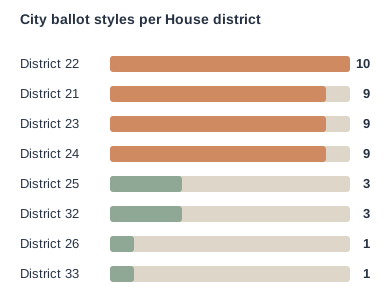
Which state House district is yours? Salt Lake City voters are spread across eight, according to the county's ballot style list, and most city ballots carry District 21, 22, 23 or 24.
A few carry 25, 26, 32 or 33. Unless noted, positions are from the Tribune's 2026 questionnaire.
Money figures cover contributions reported since January 1, 2025, from each candidate's PCC.
The Utah House of Representatives has 75 members, each representing a different area of the state and elected to a two-year term. Representatives serve smaller districts than senators, so yours is often the state lawmaker closest to your neighborhood.
Late October in Salt Lake City means a ballot on the kitchen counter, a few big decisions at City Hall and Halloween lights at the zoo. This newsletter gives you the insights, dates, places and links that make community involvement easy.
At Salt Lake City Magazine Limited, our mission is to give you unbiased information. If you think an article is missing information or important context, contact us.
Forecast unavailable right now.
Weather data: Google weather
Vibe: Kids and family, Outdoors
How do families save Peter Pan from Captain Hook in the glowing garden?
The story this year: Captain Hook has shrunk Peter Pan and locked him in Skull Rock, and it is up to the kids to save him.
When: Through October 30, 2026. Mon to Thu 6:00 to 8:00 p.m. (last entry 7:00); Fri to Sun 6:00 to 9:00 p.m. (last entry 8:00)
Where: Red Butte Garden, 300 Wakara Way (Map)
Cost: $15 weeknights, $20 weekend nights (public); free for ages 2 and under
Families follow the glowing "Adventures in Neverland" trail through the dark garden collecting pixie dust beads for Tinker Bell, played by Kimberly Frandsen, while Marc Reading's Captain Hook prowls the paths.
Along the way there is a storyteller, Ginger Parkinson; Puppets in the City; a DJ; and, on October 23 and 24, the band Snarlin' Yarns. Warm up with Buzzed Coffee, DonutNV or Zapplz.
Good to know: everyone over 2 needs a ticket, so buy ahead online. For a calmer visit, the Hocus Crocus All-Abilities Hour runs 5:00 to 6:00 p.m. on Saturdays and Sundays.
Costumes are welcome, but guests 14 and older cannot wear masks that cover the eyes. Park in the Williams Building garage at 295 Chipeta Way. Event details
Vibe: Kids and family, Outdoors
How much farm can a family fit into one fall day?
More than 30 attractions come with one ticket at Cross E Ranch. The headliner is the "Happy Birthday America!" corn maze, cut in mini, medium and mega sizes.
When: Through October 31, 2026, closed Sundays. Mon to Thu 4:00 to 9:00 p.m., Fri 4:00 to 10:00 p.m., Sat 10:00 a.m. to 10:00 p.m.; closes 5:00 p.m. on Halloween
Where: Cross E Ranch, 3500 N 2200 W (Map)
Cost: Adults about $21 to $25 and kids 3 to 11 about $17 to $21, depending on the day; 2 and under free; tickets online only
Around it you'll find:
(That is the short version. Catch your breath at a fire pit.) Face painting and pony rides cost extra.
With kids: come Saturday morning, when the early-bird ticket is about $19 from 10:00 to 10:30 a.m., and bring a wagon and good shoes. Picnics are allowed and parking is free. Dogs on a leash are welcome.
For a date night: an evening-only ticket is about $16 after 7:00 p.m. Do the mega maze in the dark, then grab a fire pit.
What to eat and drink: caramel apples from Millie's Sweet Shop, kettle corn and churros from the Grazing Place, apple cider donuts from the Donut Barn, and burgers from the grill.
To drink there is hot cider, an apple cider slushy and hot cocoa; the ranch does not allow alcohol. Pumpkins are sold separately, by weight. Festival details
Vibe: Outdoors, Kids and family
Where can you pick a pumpkin and ride a cow train on the same afternoon?
At Wheeler Historic Farm in Murray, the pumpkin patch is free to walk, and the pumpkins are priced by size. A maze ticket also covers the playland and one ride on a wagon or the cow train.
When: Daily through October 31, 2026. Patch: Mon to Thu 10:00 a.m. to 8:00 p.m., Fri and Sat 9:00 a.m. to 9:00 p.m., Sun 9:00 a.m. to 4:00 p.m. Maze: same, but opens 4:00 p.m. Mon to Thu (10:00 a.m. October 19, 22, 26).
Where: Wheeler Historic Farm, 6351 S 900 E, Murray; the patch is in the North Parking Lot Pasture (Map)
Cost: The patch is free to walk; pumpkins are priced by size. Maze and playland $12 with one wagon or cow train ride, $10 maze only, $10 full ticket on Tuesdays; free for ages 2 and under with a paying caregiver. Extra rides $3.
Wheeler is a 75-acre working farm and public park run by Salt Lake County. The Pumpkin Days maze is built from straw bales. Extra wagon or cow train rides are $3 at the Rosebud Country Store, the Activity Barn or the ticket booth.
Dogs can come too: leashed, well-behaved dogs are welcome in the patch. On Tuesday evenings, food trucks park at the farm.
On weekdays the maze opens after school, so plan an afternoon visit. On Halloween it is open 10:00 a.m. to 4:00 p.m. Pumpkin Days details
Vibe: Civic
What would the rezone allow, and what else is on the agenda?
This is the meeting where the City Council decides what the old Ballpark site becomes.
When: Tuesday, October 20, 2026, 7:00 p.m.
Where: City Council Chambers, Room 315, City & County Building, 451 S State St (Map), or online (details on the council agendas page)
On the agenda for a vote: rezoning the former stadium property near 1300 South and West Temple to mixed use, mostly MU-8 with some MU-5, so the land can be redeveloped along the Ballpark NEXT plan that the City's redevelopment agency adopted in December 2025.
The Council also plans to vote on whether to ban new community correctional facilities and jails as a conditional use citywide; state and federal property is exempt.
Earlier in the evening there are public hearings on five grant applications, including home repairs for older adults and an all-abilities outdoor recreation project at Allen Park, and on how the City should spend next year's federal housing and community development money.
How to speak: arrive by 7:00 and fill out a comment card. The general comment period is one hour, two minutes per person, and registration closes at 7:30 p.m. Can't make it? Call the 24-hour comment line at 801-535-7654 or email council.comments@slc.gov.
Vibe: Civic
Who gets help with rent, repairs and shelter beds, and how do you speak up?
A roof fixed before winter. An apartment someone can afford. A shelter bed. Help with rent before an eviction notice. That is what federal housing money pays for in Salt Lake City.
When: Tuesday, October 20, 2026, 7:00 p.m.
Where: City Council Chambers, 451 S State St (Map), or online
It comes from the U.S. Department of Housing and Urban Development (HUD), not city taxes. The City's housing office notice says it "anticipates receiving approximately $6 million" for the 2027-2028 program year.
Before deciding how to split it, the City Council holds a hearing to ask what you think matters most. If your rent jumped or your home needs a repair you cannot afford, this is where to say so.
To take part, arrive by 7:00 p.m. and fill out a comment card, or join online. You can also call 801-535-7654, email council.comments@slc.gov or take the City's 7-minute survey through October 30. Take the survey
Vibe: Kids and family, Educational
How do you build a spider bot, and what is a Ghost Moth Ball?
On two October Wednesdays the museum stays open late for a family-friendly Spooky Science Night, with scientific surprises for kids and families of all ages.
When: Wednesdays, October 21 and 28, 2026, 5:00 to 9:00 p.m.
Where: Natural History Museum of Utah, 301 Wakara Way (Map)
All of it is included with admission:
Costumes are encouraged, and the museum asks you to prebook tickets: Book tickets
Vibe: Outdoors
How far, how steep, and how fast do you have to be?
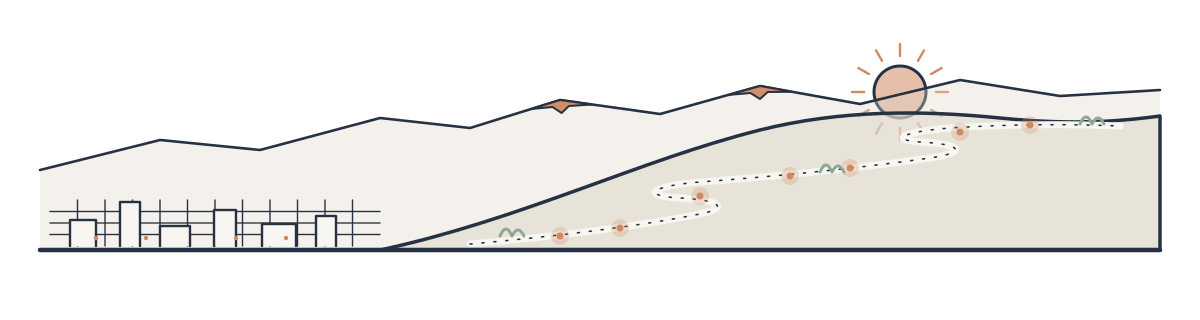
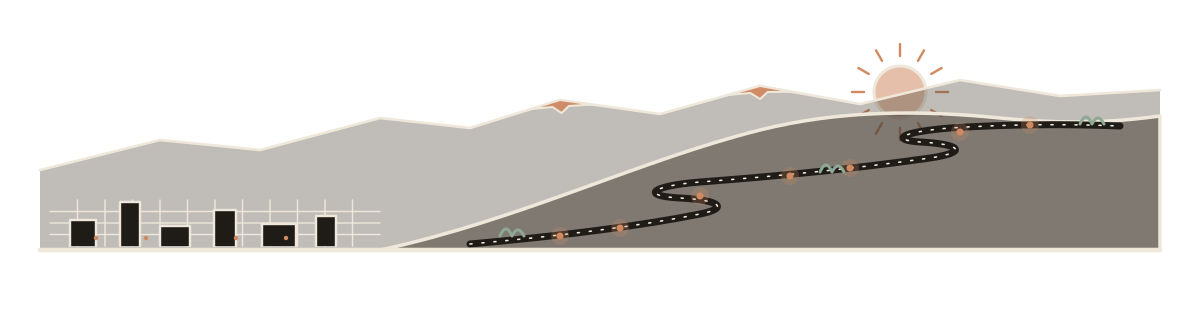
It is still dark at 7:00 when the group gathers, headlamps on, breath showing. Then the pack heads uphill and the city drops away behind you.
When: Thursdays at 7:00 a.m., October 22 and 29, 2026
Where: Oct 22 at 500 North and Columbus Street (Map); Oct 29 at the Bonneville Shoreline Trail lot across from Hogle Zoo on Sunnyside Ave (Map)
Cost: Free; all paces; dogs welcome
On October 22 the route climbs from the Capitol Hill neighborhood into Hells Canyon and along the Provo Shoreline; on October 29 it starts at the Bonneville Shoreline Trail lot across from the zoo and covers about 6.9 miles with about 560 feet of climbing.
Somewhere on the climb the sun comes over the Wasatch and the valley lights go out below.
The club says every pace is welcome, so nobody gets left at the trailhead, and dogs come along too. Bring trail shoes and a headlamp; when the trails ice up, the club recommends traction like Yaktrax.
Regulars sign a waiver, and there are no restrooms at the start. Run details
Vibe: Educational
What does a family carry when it moves, and how does clay hold it?

Material, the artist-led gallery and shop on South West Temple, is a good place to see what people in this valley are making right now, and on October 22 you can hear one of them explain her work in person.
When: Thursday, October 22, 2026, 6:00 to 7:30 p.m.; artist talk 6:30 to 7:00 p.m.
Where: Material, 2970 S West Temple (Map)
Andrea Cárdenas, the ceramic artist behind Joy Clay Works, grew up in México and trained in architecture and interior design before she turned to clay.
Her handmade pieces deal with memory, cultural identity, migration, motherhood and ancestral knowledge, the things a family carries with it when it moves.
She talks about that work from 6:30 to 7:00 p.m. Before and after, wander the gallery and The Shop, Material's store for work by local makers, where you can buy a piece to take home.
The gallery is otherwise open during events and by appointment, so a night like this is the easy way in. See the Material events page.
Vibe: Kids and family, Outdoors
What is the zoo like when the animals are asleep?
Once the animals are asleep, the zoo lights up. Hogle Halloween: A Boo Lights Experience fills the paths with glowing displays, and kids in costume can meet Spiderella, take a nighttime ride on the Eccles Express and catch Dr. Frankenstein's puppet show at 8:00.
When: Nightly, Thursday, October 22, to Friday, October 30, 2026, 6:30 to 9:30 p.m.
Where: Utah's Hogle Zoo, 2600 Sunnyside Ave (Map)
Cost: $24.95 ages 13 and up, $19.95 ages 3 to 12, free for ages 2 and under; members save $2. Train and carousel rides are $3.50. Buy tickets
Most habitats are closed or dark, so come for the lights, not the animals. The zoo suggests at least 90 minutes. It runs rain or shine, and costumes are welcome, but no full-face masks or prop weapons. Event details
Vibe: Outdoors, Educational, Date night
Who uses the river in fall, and how can you help count them?
Walk the trails along the Jordan River with Tracy Aviary's conservation team and help count every bird you see or hear.
When: Fridays, 8:00 to 10:00 a.m.: October 23 and 30, November 6, 13 and 20, 2026
Where: Tracy Aviary Nature Center at Pia Okwai, 3310 S 1000 W, South Salt Lake (Map)
Cost: The Nature Center is free to visit
The aviary describes the Nature Center as an "outdoor oasis dedicated to the wildlife of the Pia Okwai (Jordan River)," and it sits on county land in James Madison Park that the county leases to the aviary.
Fall is when ducks and other migrants pass through, so each Friday's count adds to the aviary's record of who uses the river.
What to bring: the aviary says to "come prepared for an outdoor experience." Dress for a cold morning, wear shoes that can get muddy, and bring binoculars if you have them, plus water.
How to go: drive or bike to the Nature Center off 1000 West, or walk in on the Jordan River Parkway trail. Arrive a few minutes before 8. Event details
Vibe: Outdoors, Kids and family
What does a water-wise garden look like on Halloween night?
For one night, Conservation Garden Park in West Jordan stays open from dusk to dark for trick-or-treating, pumpkin voting and a dog costume contest. Tickets are free, but you need one.
When: Friday, October 23, 2026, 5:00 to 8:00 p.m.
Where: Conservation Garden Park, 8275 S 1300 W, West Jordan (Map)
Cost: Free; a free ticket is required. Get free tickets
The garden is run by the Jordan Valley Water Conservancy District, and it tests more than 1,000 water-wise plants. On October 23, kids trick-or-treat along the decorated paths, and everyone can vote for their favorite community-carved pumpkins.
Bring the dog in costume. To enter the contest, your dog poses for an instant photo. Guests vote, and the winners are announced online. Parking is free.
Can't make Friday? The garden stays decorated through October 31, with a free Spooky Plant Hunt and Ghostly Garden Bingo, during garden hours: Monday to Saturday, 8:00 a.m. to 6:30 p.m. Event details
Vibe: Outdoors, Kids and family, Date night
Every vendor makes it within 250 miles. What can you find there that the store does not carry?
October 24 is the last Saturday of the season in Pioneer Park, and the last chance this year to buy outdoors from the people who grew, raised or baked it.
When: Saturday, October 24, 2026, 8:00 a.m. to 2:00 p.m. (last summer Saturday)
Where: Pioneer Park, 350 S 300 W (Map)
Cost: Free to walk in; vendors set their own prices
About 300 farmers, ranchers, cooks and makers have set up here this summer, and every one of them produces within 250 miles of the market, the market's director told the Tribune.
That rule is why the stalls look nothing like a grocery aisle.
Start with a cup at Santa Backyard Coffee, where Marisa Martinez, a former hair stylist, makes her Café de Olla the traditional way, stirred in a clay pot with espresso, star anise, cinnamon, clove, milk and piloncillo, a Mexican rock sugar.
Then wander to the produce stalls for something you will not find at the store, like edible flowers or pea shoots from the market's own season list.
Past those two stops there is plenty more to find: local lamb and honey, bread fermented for about 20 hours, and this year's new lunch stands, from Salvadoran pupusas to Thai street food.
It was a hard year for Utah fruit, since April frosts wiped out most tree fruit, and the growers who made it to market adapted.
The park itself is under construction this year. The City closed its north half for the work, and the market's vendors were reconfigured around it.
The south end has stayed open for the market, KSL reported, and the park's grand reopening is set for November 13.
Getting there: TRAX stops at Arena and Planetarium are a short walk away. Parking at The Gateway is free for the first hour, then $3.50 an hour, and northbound 400 West next to the park is closed during market hours.
After October 24 the market moves indoors for winter: Saturdays from November 14, 10:00 a.m. to 2:00 p.m., at 209 E 500 S, the former Leonardo building on Library Square. Market details
Vibe: Kids and family
What if trick-or-treating were built around your child's needs?


A Halloween for Every Brain brings trick-or-treating to The Gateway on Saturday, October 24, set up for neurodivergent children and their families. It is free, but you need to reserve a spot.
When: Saturday, October 24, 2026, 11:00 a.m. to 7:00 p.m.
Where: The Gateway, along 400 West and 200 South, downtown (Map)
Cost: Free; reserve a spot ahead. Reserve a free spot
The idea is simple: instead of asking neurodivergent kids to adapt to Halloween, build a Halloween that adapts to them. Everyone is invited.
Local small businesses hand out candy, toys and sensory items. Kids can dance in the music area or take a break in a calm sensory area, and families can use noise-canceling headphones, weighted vests and fidgets.
Parents will also find one-on-one behavior support, free autism screeners and information about local services. Skill Builders ABA is the organizer on the registration page. The Gateway has direct access to public transit. Event details
Vibe: Date night
Who is looking for a home at Pints & Pups?
For one hour on a Saturday afternoon, Epic's taproom turns into a dog playground, and every dog in it is looking for a home.
When: Saturday, October 24, 2026, 4:00 to 5:00 p.m.
Where: Epic Brewing, 825 S State St (Map)
Cost: Not listed on Epic's event page; a portion of proceeds goes to the Humane Society
Epic calls it a dog social: adoptable pups to play with, a beer in your hand, and a portion of the proceeds going to the Humane Society.
If you've been thinking about adopting, this is a low-pressure way to meet a few dogs; if you haven't, it's still an hour of puppies.
Make it a date: show up at 4:00 for the pups, then stay for dinner on State Street. Event details
Vibe: Outdoors
Where can you try Pilates for free, with a view of the valley?
Every Sunday through October, Salt Lake City runs a free, one-hour mat Pilates class in Donner Trail Park on the east bench. It is for all levels, and you do not need to sign up.
When: Sunday, October 25, 2026, 9:00 to 10:00 a.m. (the last Sunday of the August to October series)
Where: Donner Trail Park, 2905 E Kennedy Dr (Map)
Cost: Free; no registration
Bring a mat and a water bottle. Get there a few minutes early to set up, because everyone signs a liability waiver before class starts.
The City finished rebuilding the park this fall, with new playgrounds, a walking path and public art. The park is known for its views of the city and the mountains.
Street parking around the park is free. Class is canceled in bad weather; the City posts updates on its Facebook event page. Event details
Vibe: Outdoors, Educational
Can a free two-hour class help your dog listen better?
Salt Lake City Public Lands runs a free dog training class in Memory Grove Park on Sunday mornings in October, and October 25 is the last one. A professional trainer covers basic obedience, behavior tips and time around other dogs.
When: Sunday, October 25, 2026, 10:00 a.m. to 12:00 p.m. (the last Sunday of the October series)
Where: Memory Grove Park, 300 N Canyon Rd (Map)
Cost: Free
A professional trainer leads it (@barktobasicsllc on Instagram). Your dog does not need any past training. It does need its vaccinations, so puppies can come once they have all their shots.
Bring a leash, a harness, water and high-value treats, the kind your dog will work for. The City asks owners of reactive dogs to leave them at home.
Bad weather can cancel class, so check the City's Facebook event page that morning. Event details
Vibe: Kids and family, Outdoors
Why does daylight trick-or-treating suit toddlers?
If your kids are too little for a night of door-knocking, this is Halloween on your schedule: daylight and treat stations throughout the zoo.
When: Saturday, October 31, 2026, 9:00 a.m. to 3:00 p.m.
Where: Utah's Hogle Zoo, 2600 Sunnyside Ave (Map)
Cost: Included with zoo admission or membership
Put them in costume, bring your own bag or bucket, and trick-or-treat around the zoo from 9:00 to 3:00, with treats handed out while supplies last, so earlier is better. It happens rain or shine.
Costume rules for grown-ups and kids: no full-face masks and no costume weapons. Nap time is built in, too: go in the morning, eat lunch at the zoo, and be home before the evening rush. Event details
Vibe: Kids and family, Music and shows, Date night
What does a Day of the Dead celebration look like in Salt Lake City?

On Sunday, November 1, Centro Civico Mexicano holds its Dia de Muertos celebration, with food, folk dances, crafts, music and a Catrina parade. There is also an activity with real monarch butterflies.
When: Sunday, November 1, 2026, 1:00 to 6:00 p.m.
Where: Centro Civico Mexicano, 155 S 600 W (Map)
Cost: RSVP online. RSVP
Mexican immigrants founded Centro Civico Mexicano in 1935, and it is the oldest Hispanic nonprofit in Utah. Today it serves more than 10,000 people a year with free or low-cost cultural programs.
Plan to stay a while: eat, watch the dancers, make a craft and find a spot for the parade. The page is in Spanish and English. Event details
Vibe: Civic
Where should e-bikes ride, and what could be built next door?
Ride an e-bike on the Jordan River Parkway? Wonder what could be built next door? Both questions go to a City Council hearing on November 10.
When: Tuesday, November 10, 2026, 7:00 p.m.
Where: City Council Chambers, 451 S State St (Map), or online
E-bikes: new rules would set where electric bikes and similar devices can go on city trails and paved paths, trail by trail. A vote could come November 17.
Housing: "Expanding Housing Options" would change height, setback and lot rules in most single-family zones and allow small homes, duplexes and up to fourplexes on smaller lots without a special review. A vote is expected December 1.
To speak, sign up at the hearing in person or online, or email council.comments@slc.gov.
It is probably on your counter already. How do you make sure it counts?


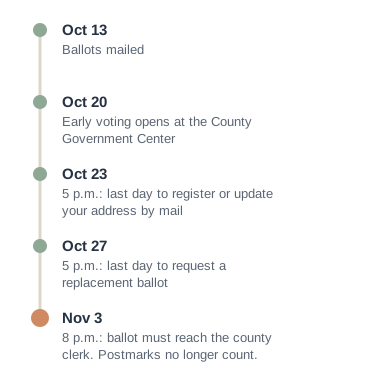
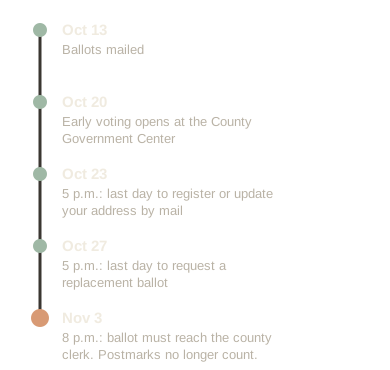
Your ballot was mailed on October 13, so it is probably already at home. Here is how to get it counted.
Step 4. Return it by 8:00 p.m. on Tuesday, November 3. New this year: a mailed ballot must reach the county clerk by 8:00 p.m. on Election Day, and a postmark no longer counts. In the last week, use a drop box.
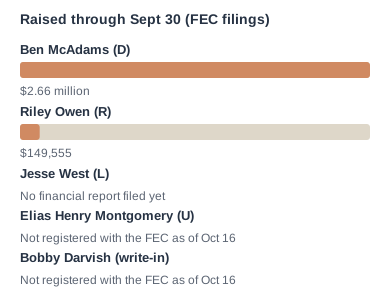
The new 1st District centers on the county. Who is running, and who is paying for their campaigns?
For years, Salt Lake City was split among congressional districts that reached deep into rural Utah. After courts ruled the old map unlawfully gerrymandered and chose a new one, the 1st District now centers on Salt Lake County.
The winner speaks for the county in Washington on costs you feel, from housing to groceries to water for the Great Salt Lake. The Tribune reports the district favors the Democratic nominee. Five people are running for the two-year term; one is a write-in.
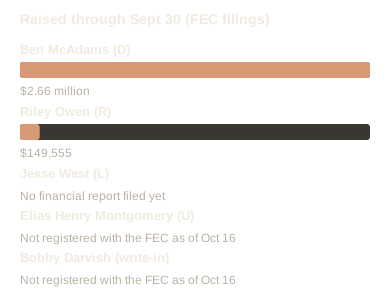
Your representative writes and votes on federal laws, from tax rates and Social Security to veterans' care and national parks. Each one serves a single district for two years, then faces voters again.
The daily work includes introducing bills, offering amendments and sitting on the committees that shape legislation before it reaches a vote.
Nine people write the county budget. Who wants the seats, and what would they change?
Republicans hold five seats and Democrats four, and the Tribune reports control is in play. Every city ballot has the countywide At-Large A seat, open after incumbent Laurie Stringham lost at the county Republican convention.
Its winner serves six years, helping write county budgets into 2033. Most city ballots, 32 of 45 ballot styles, also have District 1.
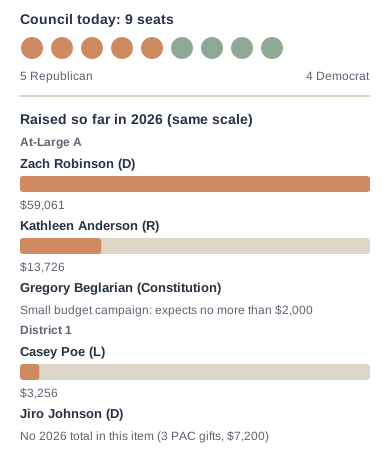
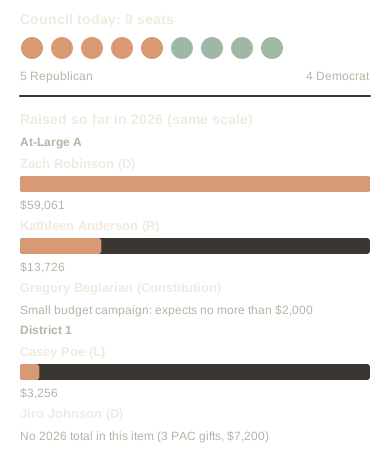
The County Council is the county's lawmaking body. Its nine members pass county ordinances, adopt the yearly county budget and approve many agreements with cities and other governments.
That budget pays for county parks, libraries, the jail and the health department, and the council sets your county property tax rate. Three members are elected countywide for six-year terms; six represent districts.
The prosecutor, sheriff, auditor and clerk are all on your ballot. What have they done, and what do they promise?


Four countywide offices are on every Salt Lake City ballot. Between them they decide who gets charged with a crime, who runs the jail, who checks how the county spends your money and who runs your elections.
The District Attorney prosecutes all felony cases in Salt Lake County and handles the county's civil legal work and lawsuits. With a staff of 255, it is the largest prosecutor's office in Utah. That shapes who is charged and which diversion programs exist.
The sheriff runs the county's two jails, the Metro Jail and the Oxbow Jail, and a public safety bureau that serves court papers and handles custody and protective-order matters. The office also runs search and rescue.
The auditor's office reviews how the county spends money and runs the county's property tax division, so it is part of how county programs are checked and how property tax is handled.
The clerk runs your elections, from voter registration to managing the voting process. The same office issues marriage licenses, takes passport applications and keeps County Council minutes and agendas.
Your senator votes on income and sales tax rates. Who is asking for that vote?
Your state senator votes on the income and sales tax rates you pay. Salt Lake City voters fall into three Senate districts this year, according to the county's ballot style list. Here is who wants each seat.
State legislative candidates report to the state through a personal campaign committee (PCC), the account a candidate uses to raise and spend campaign money. Money figures below cover contributions reported since January 1, 2025.
The Utah Senate has 29 senators who pass state laws and the state budget alongside the House, including state income and sales tax rates. Senators are part-time and meet in a 45-day general session each January.
The next board inherits those cuts. Who is running to make them?

In June the Salt Lake City School Board voted to cut $5 million over the year, and the next board inherits those cuts. Four city seats are on the ballot.
On June 2, 2026, after two budget motions failed, the board unanimously adopted the 2026-27 budget with direction to cut $5 million over the year and add no new district office positions until the district is out of non-bond debt.
The same motion requires a budget update at every business meeting and a revised district office staffing plan by January 2027. Whoever wins will be the ones holding the district to that plan. Four precincts vote this year.
The Salt Lake City Board of Education governs the city's public schools. Members are elected by precinct to four-year terms. The board adopts the district budget and votes on school closures, so it shapes which school your child attends and how money reaches classrooms.
What would the parks bond build near you, and what would it cost?
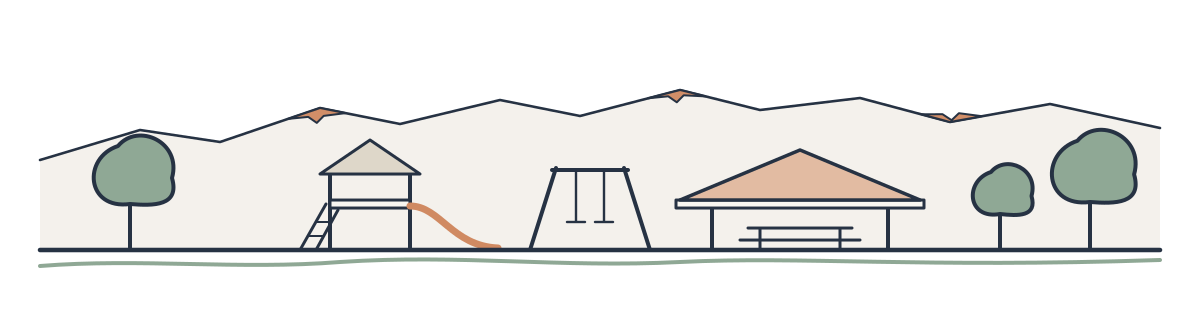
Picture a new playground at Library Square, built so kids of every ability can play side by side. It is one of four Salt Lake City projects on the county parks bond.
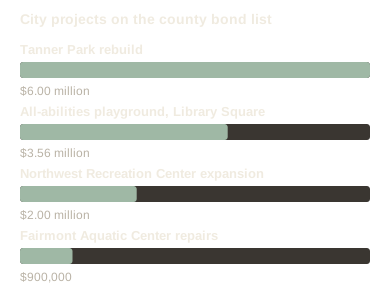
The others: a new playground and pavilion at Tanner Park, a bigger Northwest Recreation Center with a gym and space for seniors, and repairs at Fairmont Aquatic Center. If you have pushed a stroller around Tanner Park or swum at Fairmont, this is your neighborhood.
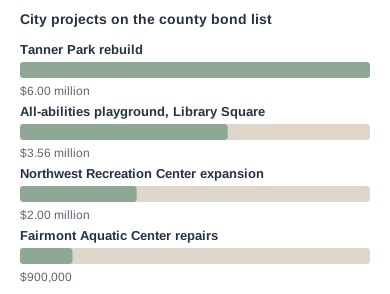
Countywide, the bond would pay for parks, trails, open space and recreation centers, with the biggest new centers in West Jordan and Midvale. The ballot asks whether the county may borrow up to $128 million to do it.
What it costs you: the ballot puts the new debt at about $1.37 a month for an average-value home. The county expects those payments to replace parks bonds from 2016 that are being paid off, so it estimates no change to today's bill.
Where should the state publish changes to the Constitution before you vote on them?


Amendment A asks where the state should publish proposed changes to the Utah Constitution before you vote on them. Today the Constitution requires lawmakers to print every proposed amendment in a newspaper in every county for two months.
Amendment A would replace that with 60 days of publication "in a manner established by state law." A companion law, H.B. 481, would have the lieutenant governor post each proposal on the Utah Public Notice Website and the lieutenant governor's website.
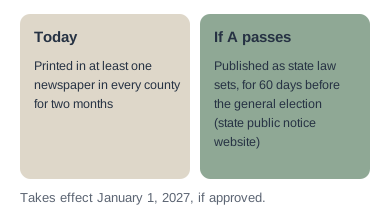
Why it's on the ballot: in 2024 the Utah Supreme Court voided an amendment in part because the newspaper step was missed, according to the state Voter Information Pamphlet.
Supporters, Rep. Anthony Loubet and Sen. Daniel McCay, say most Utahns now get information online. The pamphlet's fiscal note estimates savings of up to $1.4 million every two years. If voters approve, the change takes effect January 1, 2027.
Who decides how hard it is for voters to raise a tax themselves?


In Utah, voters can write a law themselves, gather signatures and put it on the statewide ballot. Today it passes with a simple majority, more than half the votes. Amendment B would raise that bar to 60% for any citizen initiative that raises taxes.
According to the state's impartial analysis, that means any initiative that creates a new tax, applies a tax to more things, raises a tax rate, or shrinks a property tax cut that would otherwise happen.
Other initiatives would still need only a majority, and the Legislature itself could still raise taxes with a simple majority.
Who put it on the ballot: lawmakers did. The Utah Senate voted 21 to 8 and the House 55 to 17 to send Amendment B to voters. The legislative fiscal analyst says it would not materially change state revenue.
Supporters, in the pamphlet's argument for, signed by sponsors Sen. Lincoln Fillmore and Rep. Jason Kyle, say taxes touch every family budget and should pass only with broad agreement.
They add that it matters especially because an initiative is written by its backers alone and is hard to fix once passed.
Opponents, in the argument against, signed by Sen. Luz Escamilla and Rep. Angela Romero, call it a "power grab" that holds voters to a stricter standard than lawmakers and say it could lead to higher bars for other initiatives.
The Tribune reports that Better Boundaries is campaigning against it.
Who is Better Boundaries? A Salt Lake City group formed in 2017 to put an independent redistricting commission on the ballot. Voters approved that plan, Proposition 4, in 2018.
The group now works, in its own words, against gerrymandering and to protect citizen initiatives, and it raised money for the lawsuit that led to this year's court-ordered congressional map. Elizabeth Rasmussen is executive director, according to the group's website.
How does the state grade a judge, and what did lawyers and observers say?
Near the bottom of your ballot is a run of yes or no questions that are easy to skip: should this judge stay on the bench? Utah judges are appointed first and face voters later.
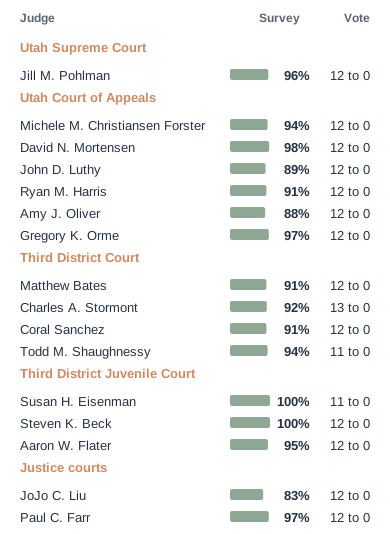
Before each retention vote, the Utah Judicial Performance Evaluation Commission surveys the lawyers and court staff who appear before each judge, sends trained observers into courtrooms and publishes what it finds. Every judge below meets or exceeds the commission's standards.
Who can reserve one of the 83 trees at Donner Trail Park, and how?
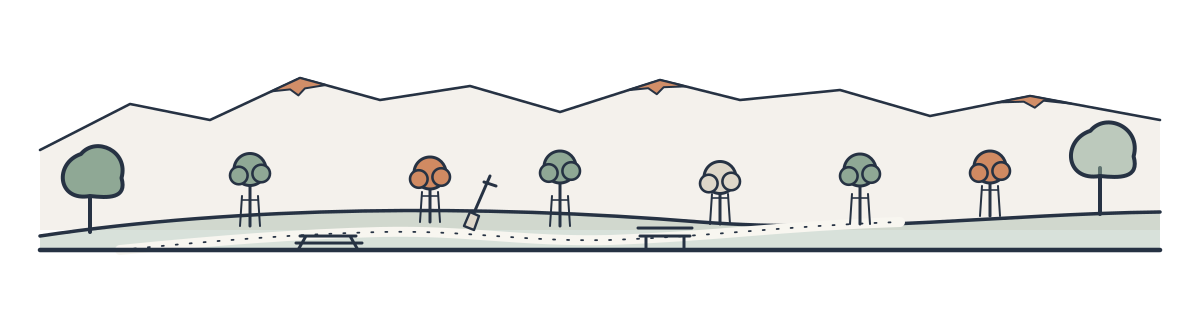
Salt Lake City has remembered people with trees since Memory Grove began in 1920. Now it has its first official memorial grove, at the rebuilt Donner Trail Park on the east bench.
Where: Donner Trail Park, 2905 E Kennedy Dr (Map)
Cost: $380 donation per tree
The grove has room for 83 trees of 17 species, scattered among the trees already there. Each can honor someone: a loved one, a friend, a group or a moment in the city's history.
Fill out the City's Donations Request Form, choose "Donner Memorial Tree Grove," pick a species (first come, first served) and give $380. Reserve before April 30, 2027, and you are invited to the Arbor Day planting.
What would the district look like, and what does the 0.5% sales tax behind it cost you?
Picture walking out of City Creek Center and straight into a car-free street lined with shops, music and a new front door to the Delta Center.
That is what Smith Entertainment Group (SEG), owner of the Utah Jazz and Utah Mammoth, showed in its first renderings on October 14. Demolition is set to start in February 2027, and SEG expects to finish before the 2034 Winter Games.
The plan includes a 6,000-seat Live Nation music venue with 80 to 120 concerts a year, a hotel nearly 250 feet tall, homes, shops and offices. The county plans a taller Salt Palace, and Abravanel Hall gets renovations.
You help pay for it. An extra 0.5% sales tax on purchases in the city, approved by the City Council in October 2024, is expected to provide up to $900 million. SEG says it will put in $3 billion of its own.
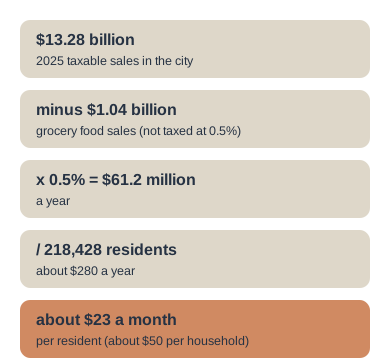
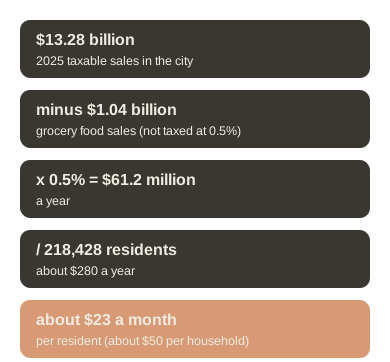
What does that tax cost? Groceries are exempt, and the rest works out to about $23 a month per resident, or about $50 per household. Visitors and commuters pay it too, so the typical resident's share is likely lower.
Expect a busy 2027 downtown: the Salt Palace is set to close for about three years starting that fall.
What is being built, and what will you be able to do there?
A climbing center with a public plaza by Central Station, new lights along Main Street, a tower in Sugar House: here is what this year's big city approvals would add to daily life.
These projects moved through city approvals this year. The details come from Planning Commission and Community Reinvestment Agency (CRA) records.
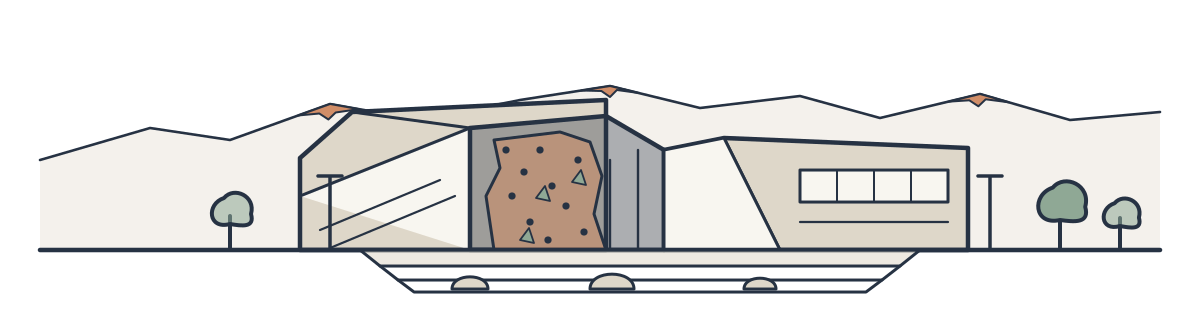
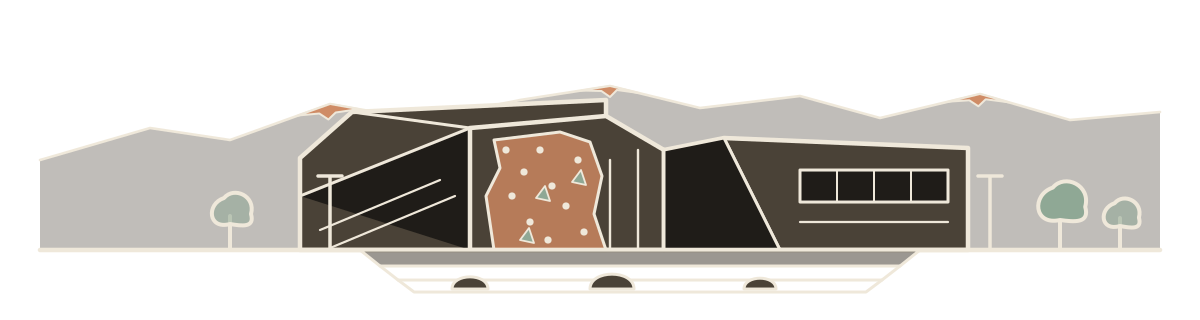
USA Climbing, the national governing body for competition climbing, plans a three-story, 99,616-square-foot headquarters and training center next to Central Station, with indoor and outdoor climbing walls, equipment rental and a café opening onto the Woodbine Court arts campus.
Outside, a sunken plaza is designed for 3,500 to 5,000 spectators at climbing events, with seating, play space for children and public art. The planning staff report says: "When not reserved for events, the plaza will be open to the public for daily use."
The design rebuilds the old Salt Lake Mattress Company building with its historic brick. The Planning Commission approved it with conditions on February 11, 2026.
The land belongs to the CRA, which leases it to USA Climbing. In March the CRA board voted 6 to 1 to add $250,000 to its support for the project.
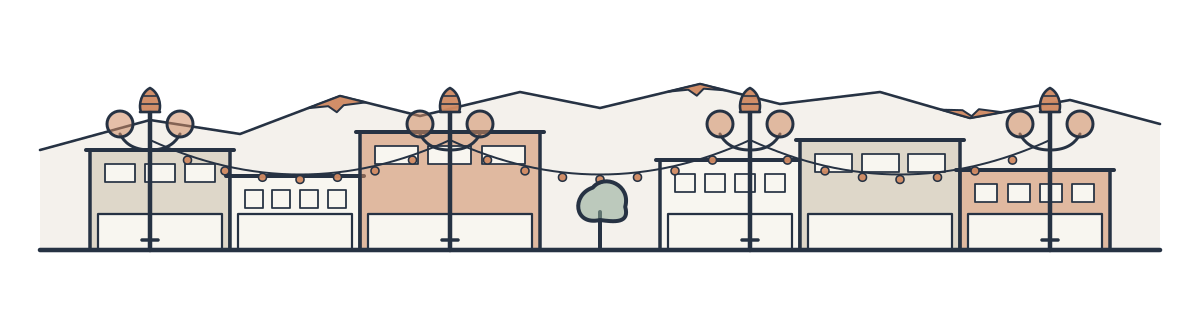
The Salt Lake Temple is scheduled to reopen in April 2027 after its seismic renovation, with an open house, according to CRA minutes from March 10, 2026.
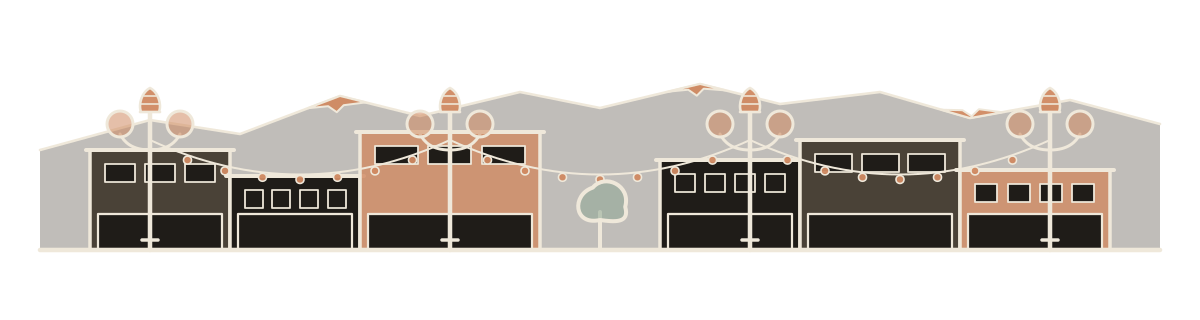
To ready Main Street, the CRA backed design of pedestrian-level lampposts and festive lighting from South Temple to 400 South. Board members asked about maintenance and designs that discourage climbing.
Gardner Group and Engine 8 proposed a 16-story building with 139 homes, 52 hotel units and about 9,000 square feet of commercial space, including a drive-through bank.
On August 12, 2026, the Planning Commission approved the drive-through bank and the planned development, but denied the open-space change that "would have allowed the additional height," according to the minutes. They do not say how tall the building can now be.
An August 11, 2025, fire destroyed the roof and interior of the building at 319 to 321 S Main, where Los Tapatios and London Belle operated.
Permits show a new four-story building shell at 319. Next door at 323, Whiskey Street is being rebuilt with a second story.
In July the CRA approved a disaster relief loan for the 319 to 321 rebuild, and in August a separate one for Whiskey Street. The permits are in review and inspection.
On the block between 500 and 600 South and 400 and 500 West, Blaser Ventures plans affordable and market-rate housing, shops and open space around six grain silos that will stay standing.
The first commercial building, at 522 S 400 W, would hold a dining area, a live music venue and bowling. The Planning Commission approved it on September 9, 2026.
In July the CRA board voted 6 to 1 to approve tax increment terms for the project's first five phases, which include homes restricted to households earning 60% of area median income or less.
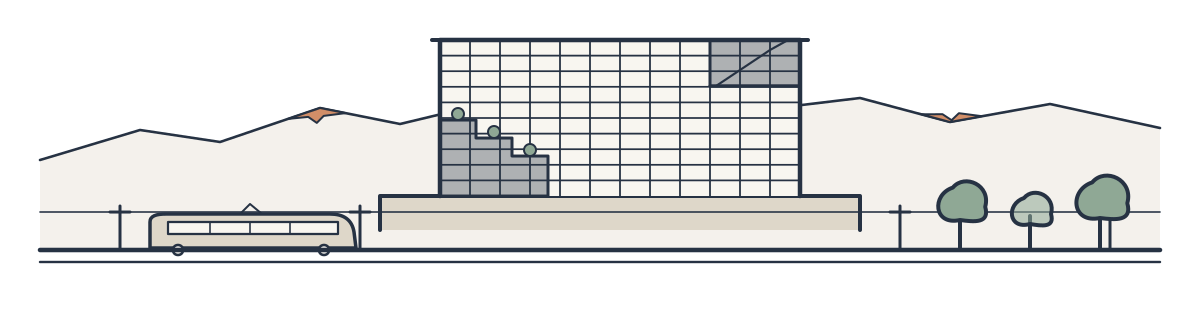
How much did crime drop, and what does the police department cost each resident?
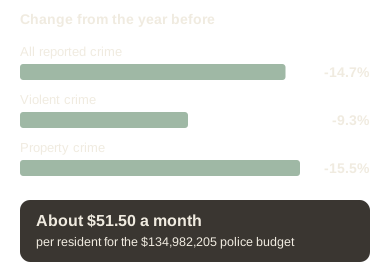
Salt Lake City police counted 14.7% less reported crime in their 2026 fiscal year, July 2025 through June 2026, than the year before, according to the department's annual report.
Both big categories fell:
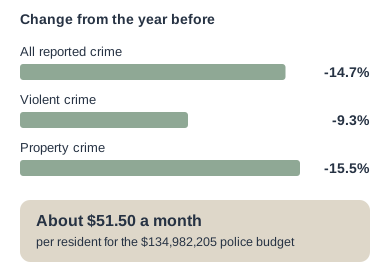
When someone calls with an emergency, the most urgent kind of call, Priority 1, drew an average response of 7 minutes 3 seconds. The department had 644 sworn officers and 155 civilian staff.
What does that cost you? The department's total budget is $134,982,205. Divide by the city's 218,428 residents and you get about $618 a year. Divide by 12 and it is about $51.50 a month per resident.
Visitors and commuters also use police services, so think of that as an average, not a bill. For newer numbers by neighborhood, the department posts a dashboard of preliminary figures.
How does a restaurant for making art work, and who started it?


When Madi Nilsson was a kid, she ran summer camps for the neighborhood kids in her parents' backyard: watercolor one day, sewing the next.
Years later, on a trip to London, she wandered into a café that served art projects instead of food, and the idea stuck.
In mid-November 2025 she opened Art Café at 870 E 900 S in the 9th and 9th neighborhood, a few blocks from Salt Lake Pottery Studio, the shop she opened in 2022.
"Everything we did in the summer camps is on the menu," she told the Tribune.
It works like a restaurant.
You get a table and a menu, and you order an "entrée": a flight of ink, a charcoal sampler, an air-dry clay soufflé or a collage buffet.
A server brings the materials and handles the cleanup. A session runs about 90 minutes, and every art experience is $28. You're welcome to bring your own snack and drink.
The café puts it this way: "We believe that you don’t have to be “good” at art to enjoy it." Come solo, on a date, with friends or with kids.
Hours are 4:00 to 10:00 p.m. on weekdays and 11:00 a.m. to 10:00 p.m. on weekends; reservations are on OpenTable through the Art Cafe website
When can you ski, and how will you get up the canyon?
Late fall is the quiet stretch in Big and Little Cottonwood Canyons, and the next few weeks set up how residents will get up there once the lifts turn.
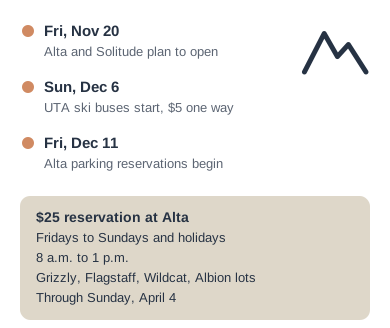
Alta Ski Area and Solitude Mountain Resort both plan to open on Friday, November 20, conditions permitting. Alta is starting its 89th winter, and Solitude is throwing a DJ and Donuts Opening Party that day.
Parking at Alta changes in December. Starting Friday, December 11, a $25 reservation is required Fridays through Sundays and holiday periods from 8 a.m. to 1 p.m. at the Grizzly, Flagstaff (South Side), Wildcat, and Albion lots, through Sunday, April 4.
Reservations open in mid-October on the Alta parking site, and more are released every Sunday at 3 p.m.
Get your tires ready before the first storm.
Under the Utah Department of Transportation (UDOT) traction rules for the Cottonwoods, tires need at least 5/32 inch of tread when restrictions are on, and UDOT can put them in place up to 24 hours before a storm. Check live road status.
To skip the drive, use Utah Transit Authority (UTA) ski buses. Seasonal canyon service starts Sunday, December 6, and each one-way ride costs $5, included with resort season passes and Ikon Passes. UTA ski bus details
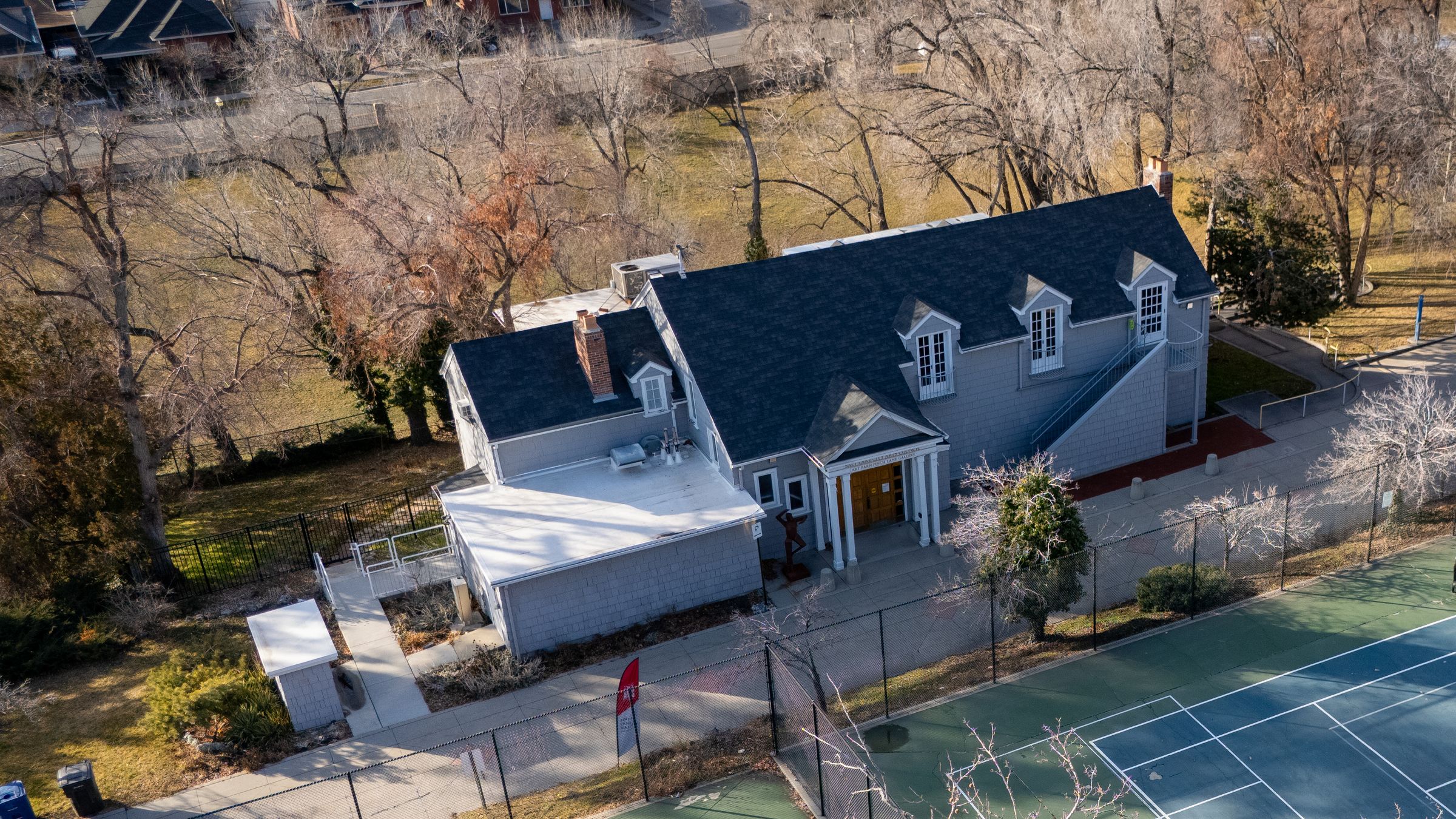
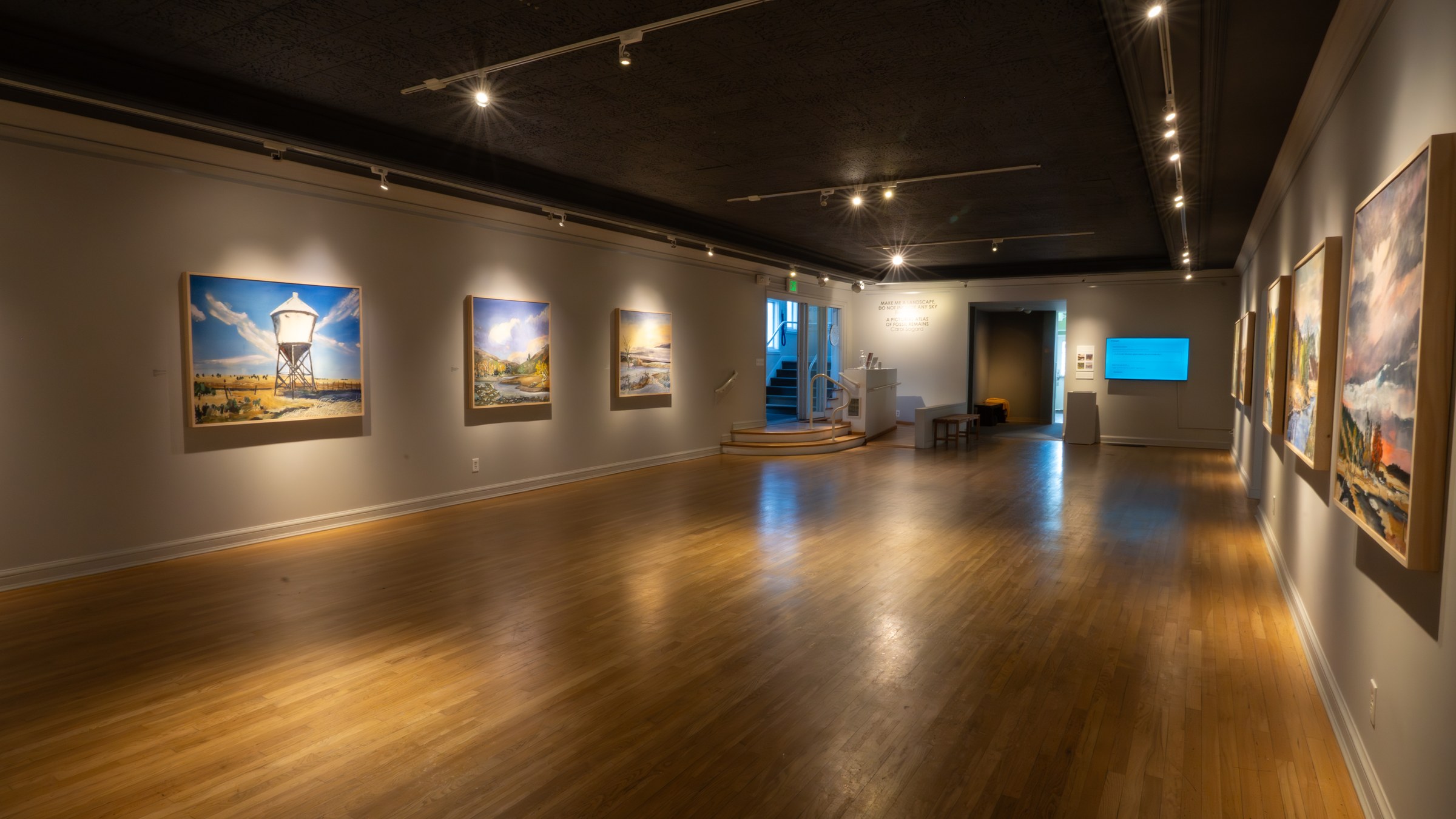
What opens at Finch Lane on November 2, and what else does the city's Arts Council run from the same desk?
Photos courtesy of Salt Lake City Arts Council
Some cities scatter their arts calendar across five tabs you never bookmark.
When: Monday, Wednesday, Thursday and Friday, 9:00 a.m. to 5:00 p.m.; Tuesday, 9:00 a.m. to 8:30 p.m.; closed weekends
Where: Finch Lane Gallery, 54 Finch Lane, in Reservoir Park (Map)
Through October 23, the gallery shows textiles, ceramics and mixed media. Two new shows open November 2 and run through December 18, with an opening reception Friday, November 6, 6:00 to 9:00 p.m.
Salt Lake keeps a clearer door: Finch Lane Gallery in Reservoir Park, where the Salt Lake City Arts Council points neighbors toward gallery shows, outdoor concerts, folk traditions, grants, and public art from one desk.
That is the quiet usefulness of the place. You can walk into Finch Lane Gallery for what is on the walls right now, then follow the same home base out to the Twilight Concert Series, Living Traditions, the Grants program, and public art around town, without treating each program like a separate hunt.
Photos courtesy of Salt Lake City Arts Council